
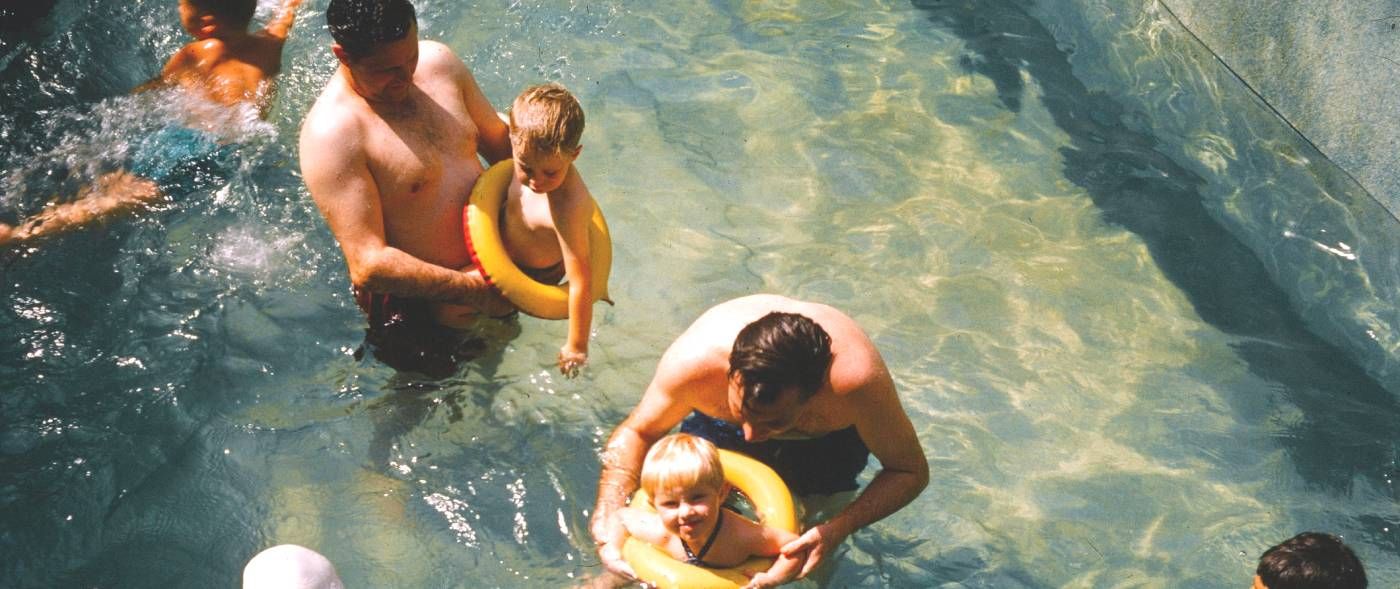
For many parents in Northeast Florida, enrolling a child in swim lessons feels like checking an important safety box. Once your child learns how to tread water or doggy-paddle, it is easy to feel like the biggest risks are behind you.
The reality is much more complicated.
Living in Jacksonville means being surrounded by water. It’s a core part of our local lifestyle, from weekends at Jacksonville Beach and boating on the Saint Johns River to the neighborhood pools and residential retention ponds that sit right in our own backyards. Because water is everywhere, teaching your child to swim is only part of the puzzle. If an unexpected emergency happens, parents are the true first responders. A parent’s own confidence and skill level around the water can make a life-saving difference.
Water safety is not just a youth skill. It is a family skill.
The Hidden Gap in Adult Swim Skills
Many adults assume they are competent swimmers simply because they can stay afloat or make it across a pool on a sunny vacation day. However, data highlights a stark gap between perceived comfort and actual emergency preparedness.
According to research from the American Red Cross, nearly 80% of adults in the United States say they can swim. However, only 56% can actually perform the five basic water competency skills essential for survival in a crisis:
Entering water that is over your head and resurfacing safely.
Floating or treading water for at least one minute.
Turning around in a full circle and locating an exit.
Swimming 25 yards (the length of a standard competitive pool) to safety.
Exiting the water without assistance or using a ladder.
If your child slipped into deep water or a fast-moving current today, would you honestly feel confident jumping in to manage both their weight and your own survival? This isn't about fostering fear; it’s about realistic preparation.
Why Local Hazards Demand Stronger Parental Skills
Our unique Northeast Florida geography means that adult water avoidance is rarely an option. Once you have children, water exposure becomes a daily reality. Local families frequently find themselves navigating:
Backyard pool gatherings and neighborhood splash pads.
Vacation rentals and hotel pools along the coast.
Boating trips, Intracoastal waterways, and beach outings.
Unsecured residential retention ponds.
Retention ponds are an underrecognized part of Florida’s drowning crisis. They are a standard feature in nearly every Jacksonville apartment complex and housing development. The tragic, recent loss of two-year-old Melani Ava Mixson here in Jacksonville serves as a heartbreaking reminder of how quickly a child can wander near these unsecured water hazards. Children, especially very young children or those with neurodiversities like autism, are naturally drawn to water but completely lack an awareness of its dangers.
When a child slips into deep water or panics, adults who are confident and competent in the water are vastly better equipped to:
Keep their composure and avoid contagious panic.
Recognize the silent signs of drowning sooner (drowning is rarely loud or splashy. It is a quiet, rapid event).
Safely guide a struggling child to an exit point.
Maintain hyper-vigilant, active supervision without distractions.
Children Mirror Their Parents' Comfort
Children absorb far more from their caregivers than we realize. If a parent exhibits fear around the pool, avoids getting in the water entirely, or reacts anxiously during beach outings, children pick up on those cues. This can inadvertently slow down their own progress in youth swim lessons.
The inverse is equally powerful. When children watch the adults in their lives behave calmly, respectfully, and confidently in the water, it reinforces healthy water habits and accelerates their own learning curve.
You do not need to be an Olympic swimmer like local champion Ryan Murphy to protect your family. You simply need to be comfortable, knowledgeable, and capable of executing basic water survival skills. For families already enrolled in youth swim lessons, upgrading your own aquatic skills is a natural, necessary extension of what your kids are learning.
Changing Laws Emphasize Prevention
Florida’s lawmakers are increasingly recognizing that water safety requires layers of protection. Recent legislative efforts, like proposed Senate Bills 606, 608, and 610, aim to mandate strict safety features (like four-foot fences, alarms, and safety covers) for residential pools and vacation rentals across the state, alongside expanding drowning education for new parents.
While physical barriers and laws are vital tools, the ultimate layer of protection will always be human capability and supervision.
What to Do During a Water Emergency
No parent wants to envision a crisis, but knowing exactly how to react saves seconds when they matter most. Keep these crucial rules in mind:
Stay Calm: Children look to your emotional state. Keeping your panic in check allows you to think clearly and execute a plan.
Call for Help Immediately: If someone is missing or struggling, call 911 right away. Never delay alerting emergency responders.
Remember "Reach or Throw, Don't Go": Many adult drowning incidents occur when a well-meaning caregiver jumps in to save a child without the physical swimming endurance required to handle a panicked victim. Whenever possible, reach out with a long object (like a pool skimmer), throw a flotation device, or find immediate assistance before putting yourself in danger.
Learn CPR: Drowning is fundamentally an oxygen deprivation crisis. Knowing how to administer CPR while waiting for Jacksonville emergency personnel is one of the most empowering skills a parent, grandparent, or babysitter can possess.
Always Seek Medical Attention Afterward: Even if a child seems completely fine after a near-drowning scare or water inhalation incident, an immediate medical evaluation is mandatory. Tiny amounts of water trapped in the lungs can cause delayed, life-threatening breathing complications hours after leaving the pool.
It Is Never Too Late to Learn
Many adults skip swim lessons because of embarrassment, a belief that it's "too late," or the misconception that swimming is a skill meant only for kids. In reality, millions of American adults never had the opportunity to take formal swim lessons growing up.
Adult swim programs are not designed to turn you into a competitive racer. They are tailored to meet you exactly where you are, helping you eliminate anxiety, master water competency, and gain the peace of mind required to enjoy Florida living safely.
Whether your goal is to comfortably splash with your kids at the beach, feel secure at neighborhood pool parties, or ensure you are fully prepared for the unexpected, investing in adult swim lessons is an investment in your family’s safety.
Water confidence shouldn't belong to just the kids; it belongs to the whole family.
Take the next step in protecting your family:
Sign up for Adult Swim Classes with Hudson Valley Swim Jacksonville by visiting our signup screen or call us at (904) 442-8288.